Buying a Used Boat: The Essential UK Checklist
Found a used boat you like? Work through these checks covering ownership, paperwork, surveys, sea trials, insurance and finance.
A well-chosen used boat can offer excellent value, but it is worth slowing down once you find one you love. A polished advert and a clean deck will not tell you everything about the condition of the vessel, its history or the seller's right to sell it.
Use this checklist to make the buying process clearer and reduce the chance of expensive surprises.
Define what the boat needs to do
Before assessing a particular boat, return to the basics. Where will you use it? How many people will normally be on board? Will it be kept in a marina, on a mooring or on a trailer? Do you need overnight accommodation, offshore capability or simply an easy boat for summer days?
A boat can be in very good condition and still be the wrong boat for your intended use. Be honest about your experience, storage options, available time and ongoing budget.
Confirm who is selling the boat
Establish the identity of the seller and whether they are the legal owner or authorised to sell on the owner's behalf. Ask to see original ownership documents rather than relying only on a name shown in an advert.
The RYA advises buyers to establish ownership, obtain a guarantee of clear title and review the chain of ownership. Its guidance on passing title to a boat recommends acquiring the Bills of Sale that document the vessel's ownership history back to its build date where available.
If ownership is unclear, documents are missing or the seller is unwilling to answer reasonable questions, pause the purchase and seek professional advice.
Use a written sale agreement
The agreement should identify the buyer, seller and boat, record the price and deposit, and explain what is included in the sale. It should also state the conditions under which the deposit may be returned.
Where appropriate, make your offer subject to a satisfactory survey, sea trial and finance. The wording matters, so use a suitable marine sale agreement and obtain legal advice if you are unsure.
Agree an inventory covering items such as electronics, tenders, trailers, covers, safety equipment, tools and loose gear. Photographs can help prevent misunderstandings about what remains on board at completion.
Arrange an independent marine survey
A surveyor works for you, not the seller. The scope will vary according to the boat, but a condition survey may examine the hull, structure, systems, machinery installations and visible equipment. Certain engines, rigs or specialist systems may require separate inspections.
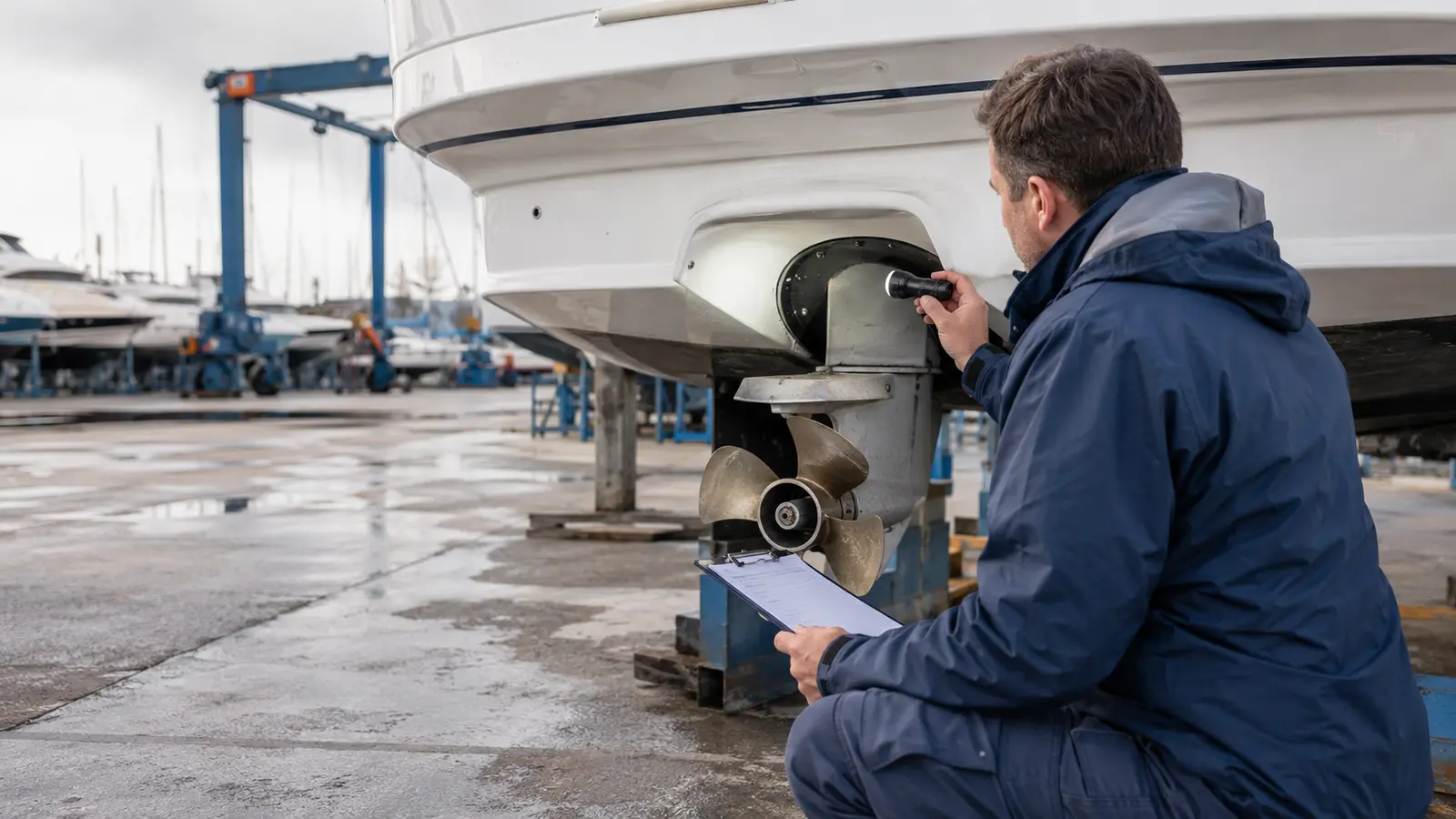
Choose a surveyor with suitable experience of the vessel type and ask exactly what is included. The boat may need to be lifted from the water so the underwater sections can be inspected.
Do not treat a recent survey commissioned by somebody else as a complete substitute for your own advice. Its scope may differ, conditions can change and you might not be able to rely on the report.
Take a proper sea trial
A sea trial lets you see how the boat starts, manoeuvres and performs under load. It can reveal issues that are difficult to identify while the vessel is tied to a pontoon.
Depending on the boat, check steering, controls, engine temperatures, vibration, smoke, instruments, charging systems, bilge operation and navigation equipment. A sea trial is not the same as a full mechanical inspection, so consider bringing an engineer for an older, complex or high-value engine installation.
Review the paperwork
The exact documents vary, but commonly requested records include:
Bills of Sale and ownership history
Builder's certificate where available
Evidence relating to VAT status where relevant
Registration documents
Recreational Craft Regulations or earlier RCD compliance documents where applicable
Engine and equipment service history
Previous survey reports
Boat Safety Scheme certificate for applicable inland craft
Manuals, warranties and invoices for major work
Check identification details such as the hull number and engine serial numbers against the available paperwork.
Price the work identified
Almost every used boat will need something. Separate minor cosmetic jobs from safety-critical defects and expensive structural, mechanical or rigging work.
Ask suitable professionals to estimate the cost of significant recommendations. You can then decide whether to proceed at the agreed price, renegotiate, require work before completion or withdraw in accordance with the sale agreement.
Arrange finance and insurance before completion
Pre-approval can help establish your budget, but final finance will remain subject to the lender's checks and the boat being acceptable. Tell the finance provider if the survey changes the purchase price or uncovers material issues.
Obtain an insurance quotation before completing the purchase. An insurer may request a survey, impose conditions or exclude particular risks. For boats used on inland waterways, registration or licensing may also require insurance and a valid Boat Safety Scheme certificate or exemption. GOV.UK advises checking with the relevant navigation authority for the waterway you intend to use.
Final checks before funds are released
Before completion, confirm:
The written agreement and final price are correct
Survey recommendations have been resolved or accepted
Finance and insurance are in place
Ownership and compliance documents are ready to transfer
The agreed inventory is still aboard
The boat is free from finance or other claims, as required by the agreement
You know when and how possession, keys and documents will be handed over
Careful checks should not take the excitement out of buying a boat. They help make sure that excitement continues after the first day of ownership.
You can browse used boats and compare estimated monthly repayments before arranging your next viewing.
Finance is subject to status, affordability and approval. Terms vary according to individual circumstances and the boat being financed. Your boat will provide security for the loan.


